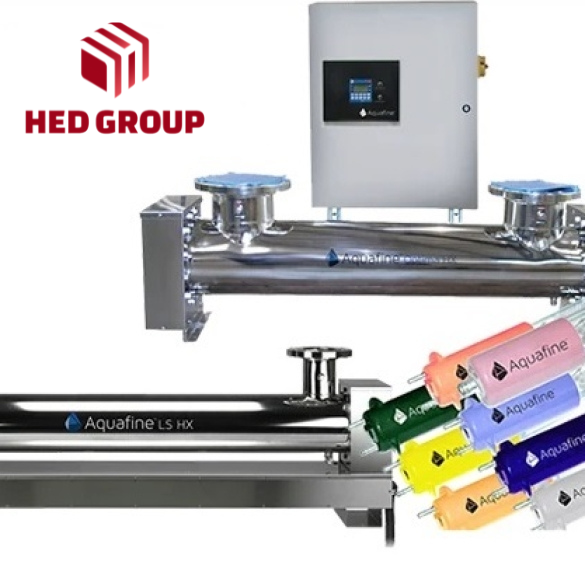
 |  |
 |  |
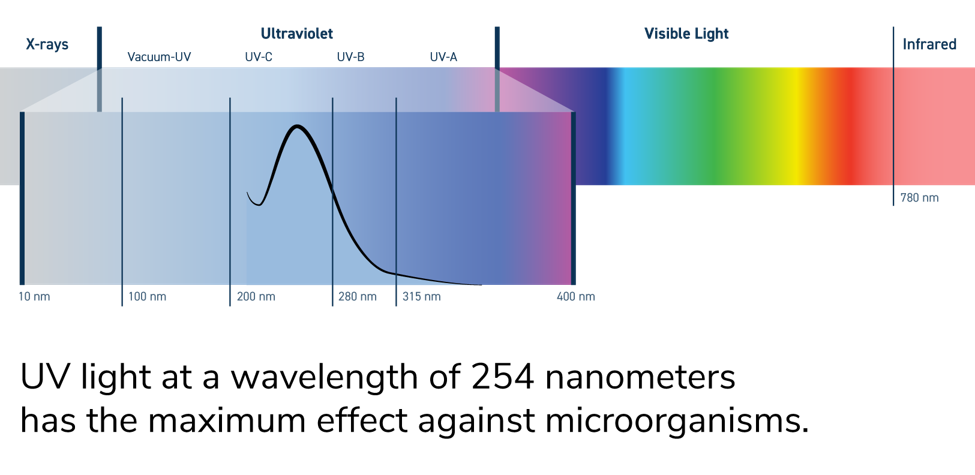
Ultraviolet (UV) light is a form of energy that is invisible to the human eye. It lies within the electromagnetic spectrum between X-rays and visible light.
A unique characteristic of UV light is that at specific wavelengths, between 200 and 300 nanometers (one billionth of a meter), it is capable of inactivating microorganisms such as Cryptosporidium and Giardia. This capability has enabled UV to be widely applied as a highly effective method for wastewater and drinking water treatment.
UV lamps are quite different from conventional incandescent bulbs. While electric current still passes through a tungsten filament and heats it up, this energy “excites” a very small amount of mercury vapor inside the lamp. It is the mercury vapor that emits light and produces UV radiation.
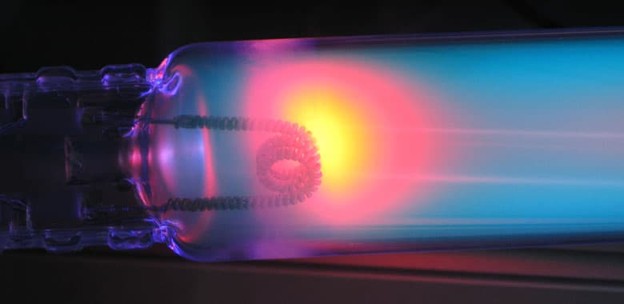
The electric current passes through the tungsten filament, causing it to heat up, and this energy “excites” a very small amount of mercury vapor inside the lamp.
In water treatment applications, UV light quickly and effectively inactivates microorganisms through a physical process. When exposed to UV wavelengths, microorganisms instantly lose their ability to reproduce.
Microorganisms are inactivated due to damage to their nucleic acids. High-energy short-wave UV light, primarily at 254 nm, is absorbed by the RNA and DNA of the cells. This absorption forms new bonds between adjacent nucleotides, creating double bonds or dimers. The formation of thymine dimers is the most common photochemical damage, preventing DNA replication.
UV light has been proven effective against a wide range of microorganisms, including those that cause cholera, polio, typhoid, hepatitis, and other diseases.
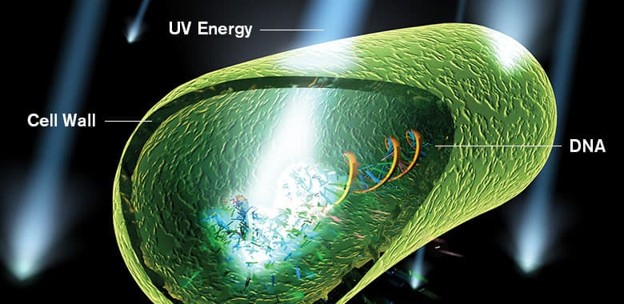
Illustration of the effect of UV energy on the DNA of microorganisms.
Numerous scientific studies have demonstrated UV’s ability to inactivate a wide range of microorganisms. One key advantage of UV is its effectiveness against chlorine-resistant pathogens, most notably Cryptosporidium and Giardia.
In municipal wastewater treatment, disinfection is necessary to reduce microorganisms (often pathogenic) before treated water is discharged into receiving water bodies. These water sources are frequently used for recreational activities such as swimming and fishing, and downstream communities may rely on them as drinking water sources.
In municipal drinking water treatment, UV is often combined with chlorine to create a strong multi-barrier protection system. UV and chlorine naturally complement each other, as UV is highly effective against Cryptosporidium, which is resistant to chlorine. By using UV as a primary treatment method, the required chlorine dosage (concentration × time) can be reduced. UV does not produce disinfection by-products, does not affect water taste or odor, and can be easily integrated into existing treatment systems.